304 vs. 316 Stainless Steel: Which Grade Do You Actually Need?
When you are browsing cable railing systems, the word "stainless" does a lot of heavy lifting. It implies durability, sleekness, and a rust-free life. But for the discerning homeowner or contractor, "stainless" is just the starting point.
In the world of metallurgy, there is a massive difference between the standard industry grade (304) and the superior "Marine Grade" (316). While they may look identical to the naked eye, their chemical makeups behave very differently when exposed to the elements.
At Keuka Cable, we believe in building for longevity. To make the right choice for your project, you need to understand what is happening beneath the surface of the metal.

The Metallurgy: What’s Inside the Alloy?
Stainless steel is an alloy, meaning it is a mixture of different metals melted together to create a material stronger than its individual parts. Both 304 and 316 grades share the same iron base, and both rely on Chromium and Nickel to provide that signature shine and general protection.
However, there is one invisible ingredient that separates the two: Molybdenum.
- 304 Stainless Steel: This is the most common form of stainless steel used in the world. It is composed of roughly 18% chromium and 8% nickel. It is tough, flexible, and resistant to general oxidation (rust) caused by rain or humidity.
- 316 Stainless Steel (Marine Grade): This grade includes all the chromium and nickel found in 304, but with the addition of 2% to 3% Molybdenum. This single element drastically changes the steel’s ability to fight off corrosion from chlorides, specifically salt.

The Invisible Enemy: What is "Pitting"?
Why does that extra Molybdenum matter? It protects against a specific, aggressive type of corrosion called pitting.
Standard rust (iron oxide) usually appears as a reddish flake on the surface. Pitting is more insidious. It occurs when chloride ions, found in abundance in sea spray, salt air, and even de-icing salts on roadways, attack the passive protective layer of the steel.
In 304 stainless steel, these chlorides can penetrate the surface, creating microscopic holes or "pits." Once a pit forms, it becomes a trap for more saltwater, accelerating corrosion from the inside out. On the surface, this might just look like tiny dark spots or "tea staining," but structurally, it compromises the integrity of the metal over time.
316 marine grade stainless steel is chemically engineered to resist this chloride attack. The molybdenum strengthens the passive layer, effectively bouncing the chloride ions off the surface and preventing the pits from forming in the first place.
Which Grade Do You Actually Need?
Choosing between 304 vs 316 stainless is largely about environment.
Choose 304 Stainless Steel If:
- You are Indoors: For interior staircases, lofts, or banisters, 304 is the industry standard. It will maintain its brilliance indefinitely in a climate-controlled home.
- You are Inland: If you are located miles away from the ocean and aren't directly exposed to heavily salted roads, 304 is a durable and cost-effective choice for outdoor decks.
- Budget is a Primary Concern: 304 is generally more affordable than 316, making it a great entry point for achieving the cable railing look without the premium price tag.
Choose 316 Marine Grade Stainless Steel If:
- You are Near the Coast: If you are within 10 miles of saltwater, 316 is non-negotiable. Salt air travels further than you think, and 304 will likely develop tea-staining within months in these conditions.
- You have a Pool: Chlorine is a chloride, just like salt. If your railing is near a pool or hot tub, the splashes and chemical vapors require the resistance of 316.
- You Want "Install and Forget": For those who want the absolute highest level of durability with the least amount of maintenance, 316 is the "rust proof railing" gold standard.

The Keuka Cable Difference
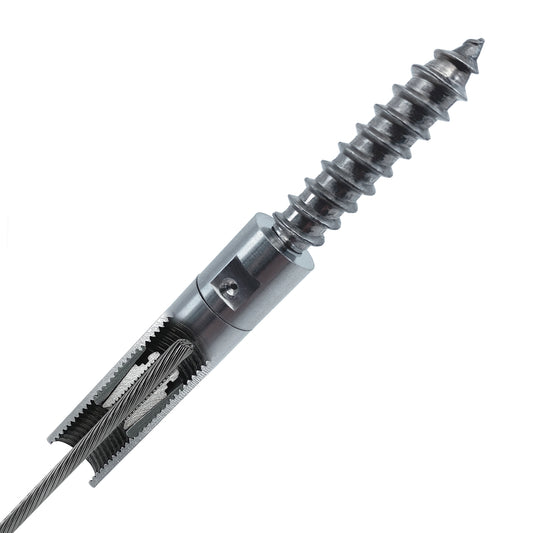
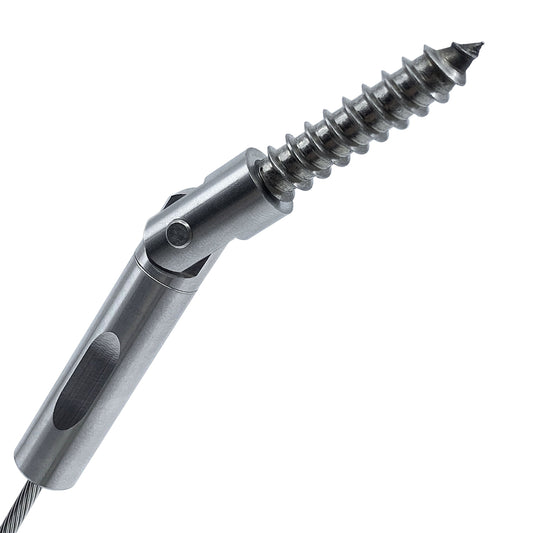
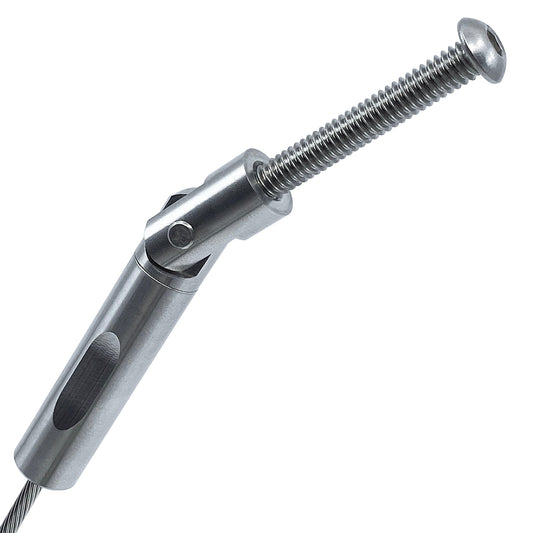
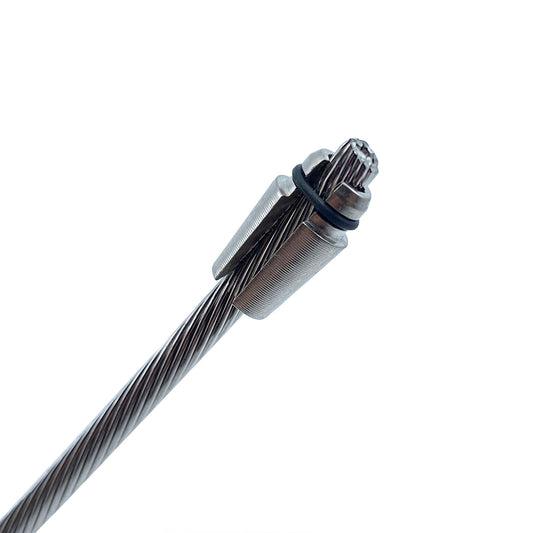
We understand that a railing system is an investment in your home’s value. That is why we made the decision to manufacture our cable railing systems with 316 Marine Grade Stainless Steel.
While many competitors offer 304 as a cost-saving "standard" option, we believe that "standard" shouldn't mean "susceptible to rust." By eliminating the lower grade entirely, we ensure that every Keuka Cable system meets the highest standard of corrosion resistance available.
When you buy from us, you don't have to worry if you picked the right metal for your geography. With Keuka Cable, you always get the armored protection of 316, ensuring your view stays clear and your railing stays strong for decades.
Ready to start your project? Explore our stainless steel cable railing hardware here and choose the grade that matches your environment.